Incentives without an operating proposition
Tax or customs advantages cannot compensate for an unclear tenant market, unreliable services or prohibitive logistics.
 INFRASTRUCTURE

Where regulatory design meets productive economic development.
An economic zone earns its relevance through the businesses that can operate there. Those businesses need reliable services, access to people and markets, workable administration and a commercial reason to choose the location. A boundary on a map and a schedule of incentives cannot settle those questions.
Special economic zones, financial free zones, industrial corridors and prospective charter-city initiatives differ in purpose and legal form. Each needs a clear account of what its rules permit, who is responsible for delivery and how public commitments connect to private investment.
For SLIP, the central question is whether the institutional arrangements and physical development support the intended economic activity. That calls for a joint examination of enterprise demand, infrastructure, governance, capital and the order in which commitments are made.
Tax or customs advantages cannot compensate for an unclear tenant market, unreliable services or prohibitive logistics.
Large early commitments can leave a zone carrying costs before viable enterprises are ready to occupy it.
Developers, authorities, utilities and operators need clear powers, obligations and ways to resolve decisions.
A productive site still needs a practical route to customers, including standards, customs procedures and transport connections.
The starting point is the decision that needs to be made and the conditions around it.
Examine the proposed activities, enterprise demand, location and commercial case before major development commitments.
Discuss this approachConnect production requirements with infrastructure, logistics, workforce needs and access to markets.
Discuss this approachDevelop the proposed project vehicles, governance responsibilities, funding stages and allocation of risk.
Discuss this approachExplore how investors and operating enterprises could participate through clearly defined roles and accountable management.
Discuss this approachUse comparative evidence, including AFCAI, to frame questions about zone conditions and investment readiness.
Discuss this approachThese areas describe how SLIP can contribute. The scope, specialist requirements and responsibilities are defined for each engagement.
Let credible operating requirements guide land use, service provision and phased infrastructure investment.
Explore structures in which capital providers and industrial operators have distinct responsibilities and shared reporting expectations. SLIP’s proposed Industrial Activation Platform belongs to this area of development.
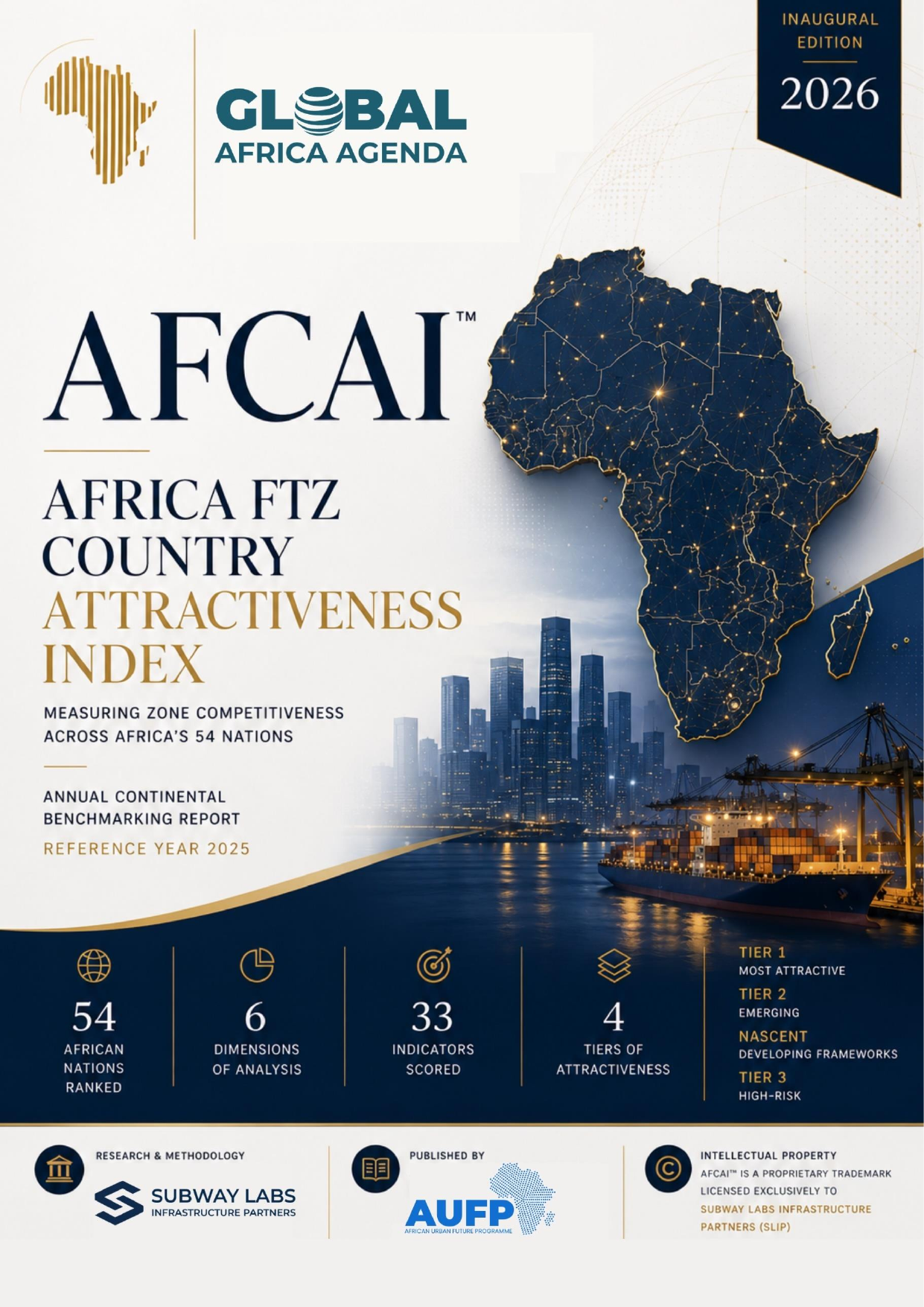
A comparative assessment of Free Trade Zone ecosystems across 54 African countries, using six dimensions and 33 indicators, with 2025 as the reference year.
Published by the Africa Urban Future Programme. Research and technical production by the SLIP Research Intelligence Unit.
Explore the index and methodology
How do we maximise Free Trade Zone and industrial incentives?
Explore capability
We map your project as a complete ecosystem — and show how to phase, optimise, and monetise every component.
Explore capability
How exactly will we finance it, legally structure it, and distribute returns?
Explore capability
A proposed zone needs an operating proposition that businesses can evaluate, from reliable services to the practical steps required to begin trading.

Industrial capacity becomes an export business only when production, market access and commercial delivery work as one system.
Tell us what economic activity the proposal is intended to support, its location and its current stage. The discussion can begin with the conditions required for that activity to work.
Discuss this theatre